

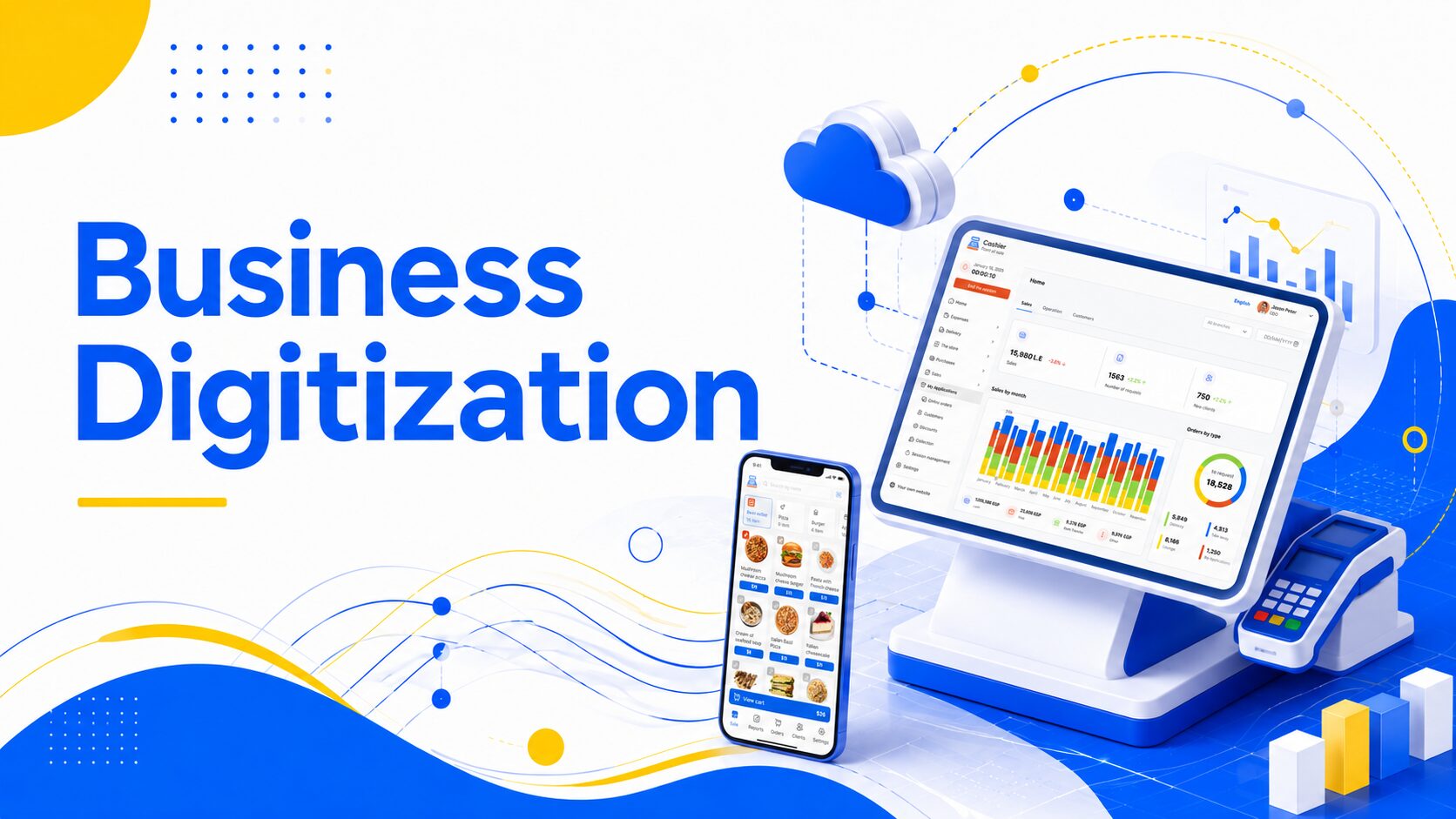
In an era defined by rapid technological change and shifting consumer expectations, businesses that cling to outdated, paper-based processes are not simply falling behind, they are actively choosing to become invisible. Whether you operate a boutique retail store, a busy restaurant, a service firm, or a growing franchise, the question is no longer whether to digitize your business, but rather how quickly you can make the transition before your competitors do it first. Digitization is the foundation upon which every modern, resilient, and scalable business is built, and understanding its full scope, from digital payments to cloud-based point-of-sale systems, is the first step toward sustainable growth.
Organize your sales in seconds with Cashier POS!
Take control of sales and users in moments, and give your business a fully integrated system that runs smoothly.
Get Started For FreeWhat Does It Mean to Digitize Your Business?
Business digitization refers to the process of converting analog operations, manual workflows, and paper-based records into digital formats, platforms, and automated systems. It encompasses everything from accepting contactless payments and managing inventory through cloud software, to generating real-time sales reports and engaging customers through digital loyalty programs. Digitization is not simply about purchasing new technology, it is a strategic commitment to reshaping how your business collects, stores, analyzes, and acts on information.
When a business digitizes its operations, it replaces friction-heavy manual tasks with streamlined automated processes. A cashier who once manually tallied receipts at the end of each day can now view an accurate, real-time sales dashboard with a single click. A manager who once counted inventory by hand can receive automatic stock alerts the moment a product falls below a set threshold. This kind of operational transformation is what separates high-performing businesses from those perpetually stuck in reactive, inefficient cycles.
Digitization vs. Digital Transformation: Understanding the Difference
While often used interchangeably, digitization and digital transformation describe two distinct phases of business evolution. Digitization is the first step, the act of converting existing manual processes into digital ones. Digital transformation is the broader, longer-term strategy of leveraging digital tools to fundamentally change how a business creates value for its customers. Think of digitization as installing the engine; digital transformation is learning how to race the car. For most small and medium-sized businesses, prioritizing digitization first creates the solid infrastructure needed before any larger transformation strategy can succeed.

The Real Cost of Staying Analog in 2026
The hidden costs of running a non-digital business are staggering, and they compound silently over time. Business owners who rely on handwritten records, manual cash registers, and paper invoices spend an enormous amount of time, time that could be redirected toward strategic growth, on administrative tasks that technology can perform in seconds. Studies consistently show that small business owners who have not digitized their operations waste an average of several hours per week on tasks that a modern point-of-sale system or cloud-based management tool would handle automatically.
Beyond the time cost, analog businesses face significant risks around data accuracy, compliance, and security. A paper ledger can be lost, damaged, or manipulated. A manual pricing system is prone to human error. A cash-only payment model alienates a growing segment of consumers who prefer digital wallets, contactless cards, and mobile payments. In a world where customer experience is the primary competitive battleground, every moment of friction at the point of sale is a potential reason for a customer to leave and never return.
Customer Expectations Have Changed Permanently
Today’s consumers, whether they are millennials, Gen Z shoppers, or even older generations who grew comfortable with digital services during the pandemic, expect seamless, fast, and transparent transactional experiences. They expect receipts delivered via email or SMS. They expect loyalty points tracked automatically. They expect inventory availability to be visible online before they even walk through your door. Businesses that cannot meet these expectations do not get second chances in an environment where alternatives are one Google search away.
Key Areas Where Digitization Transforms Business Operations
Point-of-Sale Systems: The Heart of Business Digitization
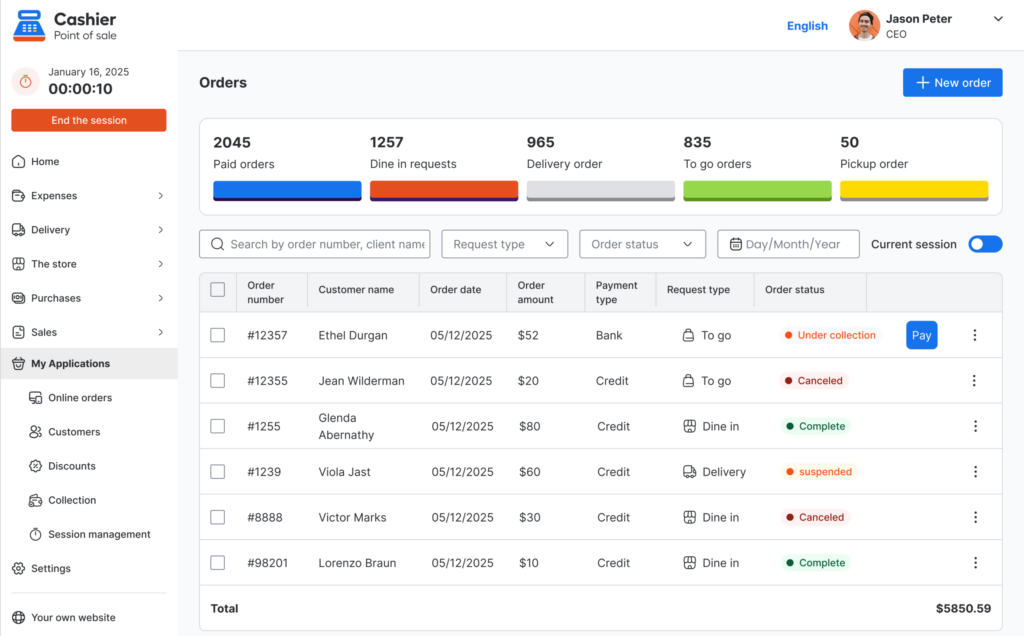
The point of sale is, quite literally, where your business converts service into revenue, and it is the most impactful place to begin your digitization journey. A modern POS system does far more than process transactions, it functions as the central nervous system of your entire operation, connecting sales data, inventory management, customer information, and financial reporting into a single, unified platform. Solutions like Cashier POS are designed specifically to give business owners this kind of integrated control, allowing them to manage their entire retail or hospitality operation from an intuitive, cloud-connected interface that works across devices, locations, and time zones.
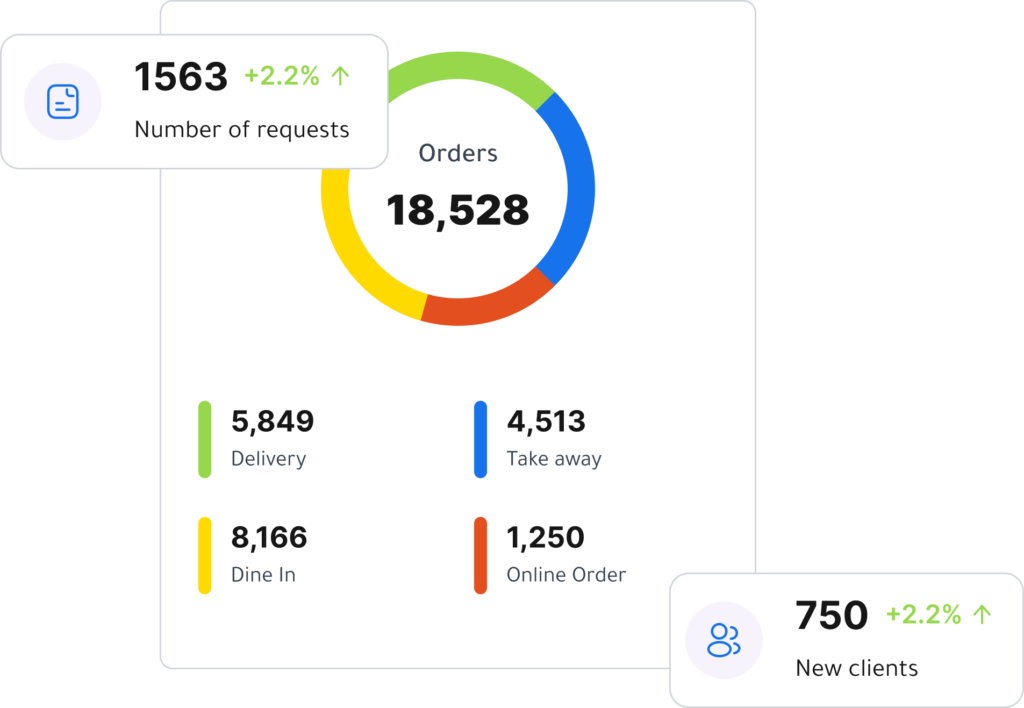
When you invest in a cloud-based POS system, you gain access to real-time data that informs smarter purchasing decisions, staffing schedules, and promotional strategies. You can identify your best-selling products, understand your peak business hours, monitor individual employee performance, and track customer purchase history, all from a single dashboard. This level of operational intelligence was once reserved for large enterprise corporations with dedicated IT departments; today, it is accessible to any business owner willing to make the switch from a traditional cash register to a modern digital solution.
Inventory Management and Supply Chain Visibility
One of the most immediate and measurable benefits of business digitization is the transformation of inventory management. Manual stock counting is not only time-consuming but inherently inaccurate, leading to overstocking, which ties up capital, or understocking, which results in lost sales and disappointed customers. A digital inventory management system, integrated directly into your point-of-sale platform, provides a live, accurate view of your stock levels at all times. Automatic reorder triggers, supplier management tools, and product performance analytics allow business owners to make proactive decisions rather than scrambling to react to problems after they have already cost money.
Digital Payments and Financial Management
Accepting only cash is one of the fastest ways to lose business in 2026. Consumers increasingly prefer digital payment methods, including credit and debit cards, contactless NFC payments, QR code-based transactions, and digital wallets such as Apple Pay and Google Pay. A modern POS system supports all of these payment formats seamlessly, ensuring that no customer is turned away due to payment limitations. Beyond accepting payments, digital financial tools allow business owners to generate accurate end-of-day reports, reconcile accounts automatically, prepare tax-ready summaries, and integrate directly with accounting software, dramatically reducing the time and cost of financial administration.
Customer Relationship Management and Loyalty Programs
Digital tools allow businesses to build genuine, data-driven relationships with their customers at a scale that was previously impossible without a large marketing team. When customer purchases are tracked digitally through your POS system, you accumulate valuable insights about buying habits, preferences, and visit frequency. This data can be used to create personalized promotions, targeted email campaigns, and structured loyalty programs that reward repeat customers, all of which have been proven to increase customer lifetime value significantly. Businesses that invest in digital CRM tools consistently outperform those relying on gut instinct and anecdotal observation when it comes to customer retention.
Analytics and Data-Driven Decision Making
Perhaps the most transformative aspect of digitizing a business is gaining access to actionable data. When your operations are digital, every transaction, every customer interaction, and every inventory movement generates information that can be analyzed to improve performance. Business owners who leverage analytics from their POS system and integrated management tools can identify trends before they become problems, optimize their product mix based on real demand, and allocate resources with precision rather than guesswork. In a competitive market, the ability to make faster and more informed decisions is one of the most powerful advantages a business can develop.
How to Start Digitizing Your Business: A Practical Roadmap
For business owners who feel overwhelmed by the prospect of digitization, the most important thing to understand is that you do not need to transform everything at once. Sustainable digitization is a phased process that begins with identifying your most pressing operational pain points and addressing them systematically. The following sequence provides a proven framework for businesses of any size.
- Audit your current processes: Document every manual workflow in your business, from how you record sales to how you reorder stock, and identify where errors, delays, or inefficiencies occur most frequently.
- Prioritize the point of sale: Upgrading your POS system delivers immediate, measurable improvements across sales, inventory, and reporting, making it the highest-ROI starting point for most businesses.
- Integrate your tools: Choose digital platforms that communicate with one another, your POS, your accounting software, your e-commerce platform, and your customer management tools should all share data seamlessly.
- Train your team: Technology adoption is only as successful as the team implementing it. Invest in thorough training to ensure every staff member understands and embraces the new digital workflows.
- Measure and iterate: Set clear performance benchmarks before and after digitization, and use your new data tools to continuously refine your operations based on what the numbers tell you.
Choosing the Right POS Software for Your Business
Not all point-of-sale systems are created equal, and selecting the right platform is one of the most consequential technology decisions a business owner can make. The ideal POS solution should be intuitive enough for any employee to learn quickly, powerful enough to support complex inventory, reporting, and customer management needs, and flexible enough to scale as your business grows. Cashier POS was built with exactly these priorities in mind, offering a feature-rich yet user-friendly platform that serves retail businesses, restaurants, cafés, and service providers with equal effectiveness. Its cloud-based architecture ensures that business owners have access to their data from anywhere, at any time, on any device.
When evaluating POS software, it is essential to look beyond the surface-level features and consider the total ecosystem: Does the platform support all payment types your customers might use? Does it offer reliable customer support when issues arise? Can it integrate with your existing accounting, e-commerce, and marketing tools? Does it provide the depth of reporting analytics needed to run a data-driven operation? These are the questions that determine whether a POS system is merely a transaction processor or a genuine business management platform.
The Long-Term Business Case for Digitization
The return on investment from digitizing a business is not hypothetical, it is well-documented across industries and business sizes. Research from McKinsey & Company and the World Economic Forum consistently demonstrates that businesses that embrace digital tools grow faster, retain customers longer, make fewer operational errors, and are significantly more resilient in the face of economic disruption. During the COVID-19 pandemic, businesses that had already digitized their operations, particularly those with e-commerce capabilities and contactless payment systems, adapted rapidly and survived, while many of their analog counterparts were forced to close permanently.
Beyond resilience, digitization creates scalability. A business with robust digital infrastructure can open a second location, expand its product range, or enter new markets without a proportional increase in administrative overhead. When your systems are digital and interconnected, growth becomes a strategic exercise rather than an operational crisis. For entrepreneurs with ambitious long-term visions, investing in digitization today is not a cost, it is the most direct path to the future they are building toward.
Organize your sales in seconds with Cashier POS!
Take control of sales and users in moments, and give your business a fully integrated system that runs smoothly.
Get Started For FreeFrequently Asked Questions (FAQ)
Conclusion
The transition from analog to digital operations is no longer a future ambition, it is an immediate business imperative for any owner who wants to compete, grow, and thrive in today’s marketplace. From the moment you replace a manual cash register with a sophisticated cloud-based POS system, you begin to unlock a compounding series of operational advantages: faster transactions, more accurate inventory, richer customer relationships, and a real-time view of your business performance that makes every decision smarter and every strategy more focused.
Digitizing your business is not about chasing technology for its own sake. It is about building an operation that can serve your customers better, empower your team more effectively, and support your ambitions as an entrepreneur. Whether you are taking your first steps toward digitization or ready to expand an already-digital operation into new channels and markets, choosing the right point-of-sale platform is the cornerstone of that journey. Cashier POS is built to be that cornerstone, a trusted, comprehensive, and genuinely intuitive solution that grows with your business, protects your data, and gives you the insights you need to stay ahead. The future of your business starts with a single decision to go digital, and there has never been a better time to make it.